- April 10, 2026

-
-
Loading
Loading
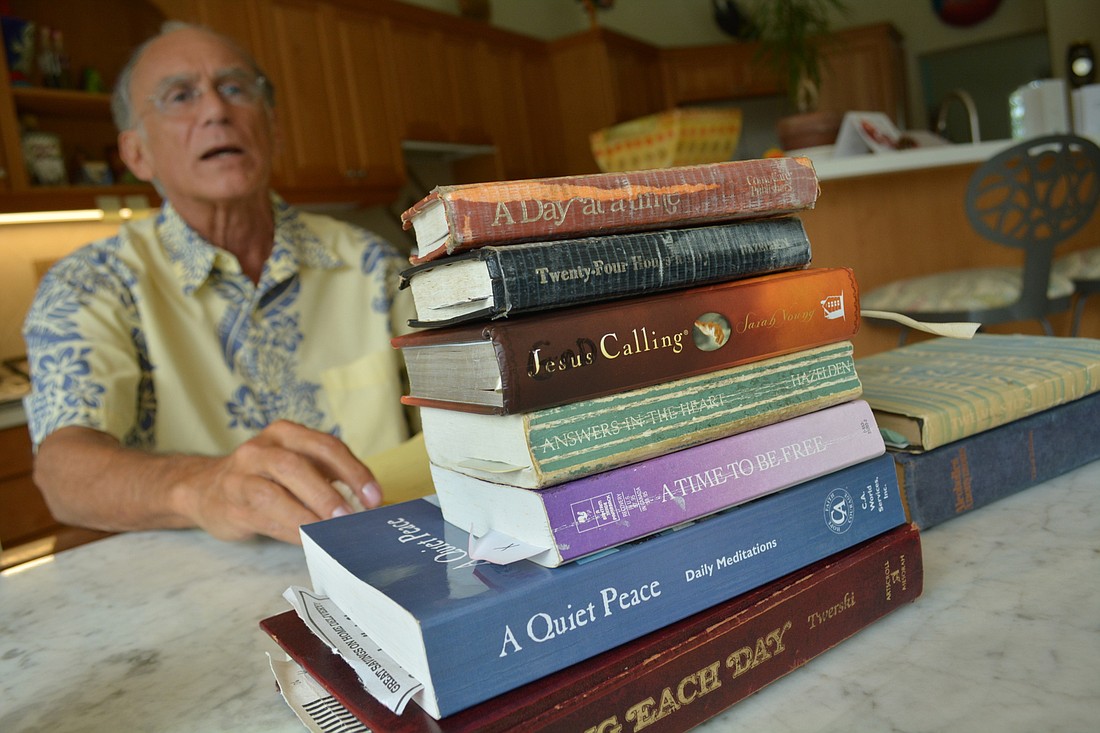
At 71 years old, University Park resident Michael Richker begins each morning by praying, journaling and reading from seven books, now worn well along their edges.
On Nov. 26, the clean-shaven, energetic man who was the longest-serving president of his congregation, Temple Emanu-El, will have been sober for 27 years. He was saved from cocaine addiction.
"The disease still talks to me every day,” he said. “Journaling, reading and praying — it’s the only way to find reprieve.”
On Oct. 11 to Oct. 12, during Yom Kippur, the “Day of Atonement," he was reminded his life story is one of redemption.
"Here is someone who was in a really dark place and wasn’t living the way he wanted,” said Temple Emanu-El’s Rabbi Elaine Glickman. “He chose a different way. A lot of his story is so inspiring. It shows what Yom Kippur is about, charting new paths.”
Rabbi Mendy Bukiet, of Chabad of Bradenton, said the holiday offers a unique focus on restoring relationships.
“It is a time to correct things that need correcting, not only between us and God, but also the things that need correcting between us and others,” he said. “In every aspect of our lives, when it comes to relationships, we can always make them better, make them more special.”
Richker lives by that concept every day, as part of a 12-step recovery program. If there’s an offense, he works to resolve it.
Like many of his colleagues, he attended college, graduated and got married. Beyond that, his story veers away from normal.
He started drinking during those years, but when his first wife left after two years of marriage, alcohol became an escape. He would drink a fifth of bourbon at home, in addition to whatever he drank outside it.
Eager for change, he packed up his things to join the family business in Chicago, stopping in California to visit a friend on his way there.
That’s when his addiction to marijuana started.
“I smoked a joint and nothing happened. I smoked another joint and nothing happened. I smoked the third joint and everything went snap, crackle and pop and I liked it,” Richker said. “I like to say I only smoked once and that was from July of 1969 to February of 1981 because I smoked every day,.”
In February 1981, he got his first taste of cocaine while at a trade show in Atlanta. When he returned home, he called all his friends until he found one who knew a supplier.
“The most important thing in my life was cocaine,” he said.
Nothing and no one else mattered. He still had his job importing cheap gifts from China because he had inherited the business from his stepfather.
He went from being a recreational user to one who used the drug almost continuously. Eventually, in October 1989, his family — second wife, Lila, and two children, Rick and Lisa, then 17 and 14, asked him to leave. He decided to go to a treatment center.
When he got there at 7 a.m., they weren’t open, so he went across the street and used cocaine until he could get in at 9 a.m. He went into detox and then three weeks into rehab, he got kicked out for drug use.
He went back to detox, this time for himself. Something happened.
“I cried out, ‘Dear God, please take this from me. I can’t do it anymore,” Richker said. “And then a miracle happened. I believe I am a miracle today — that God lifted this obsession from me.”
From that moment forward, Richker resolved to stay clean, as he has now for nearly 27 years. Longterm sobriety, he said, stems from two things: total surrender and total defeat.
Although he divorced Lila, his relationship with his children has been restored. He was remarried and widowed and now celebrates life with his partner, Joan Blum. He still still attends recovery meetings once weekly, volunteers with Temple Emanu-El and with Jewish Family and Children’s Service of the Suncoast, meets with fellow recovering addicts, counsels at the Resurrection House and takes his message of sobriety into the Sarasota County jail and a detox center once monthly.
Richker believes God has kept him alive to help others.
“My sobriety is still the No. 1 thing in my life,” he said. “If I don’t have that, I lose all of that other stuff. You have to remember that every day. This disease is relentless.”